
The Dissertation That No One Read
You remember the moment you submitted it. Years of work, nights and weekends stolen from sleep, from family, from any life that didn't demand a password and a citation. You remember the particular quality of the exhaustion: not empty, but full, heavy with everything you had poured into it. You had found something real. You had gone into the literature and into the field and into the hard, uncomfortable places where knowing requires doing, and you had come back with something that mattered. A finding. A pattern. A contribution to human knowledge that had not existed before you made it exist.
And then: chains. A PDF uploaded to a university server, shackled there by a system that was never designed to surface what you found. Three committee members who read it cover to cover, two who skimmed it, one who may have opened it at all. A binding on a departmental shelf. A congratulatory email. The system moved on. Your research was held in place, not by neglect alone, but by the active architecture of a knowledge production apparatus that was built for everyone except you.
This is not a personal complaint. This is an indictment of a broken system. And if you have lived it — if you have felt the particular, devastating quiet that follows the submission of work you gave years of your life to produce — this manifesto is written for you. Not to console you. To name what happened to you, and to offer an alternative that the system never will.
The Seven-Year Scoop
Here is the scenario that no one in higher education wants to name out loud, because naming it requires admitting that the system is not merely imperfect but structurally unjust.
You conduct your research. You design it carefully, execute it rigorously, analyze it honestly. You find something significant — a pattern in how organizations fail to retain leaders of color, a gap in how healthcare systems communicate during transitions of care, a structural flaw in how school districts measure teacher effectiveness. Your finding is real. Your methodology is sound. Your contribution to the field is genuine. You defend it. You pass. And then you go back to work — because you lead a hospital, a school, a nonprofit, a company — and there is no release time, no co-author network, no journal submission infrastructure, no institutional reward structure for what comes next. Publishing is not your job. It is someone else's job. You tuck the dissertation away and you go back to the arena.
Seven years later — sometimes five, sometimes ten — a tenure-track academic publishes a paper. The subject is familiar. The finding echoes something you wrote in Chapter Four. The conclusion lands in a place you reached years ago, in a study no one ever read, on a server no one ever searched. The academic gets cited. Gets tenure. Gets the career boost that accrues from being the person who "discovered" what you already found.
You were there first. You found it first. You will never receive credit for it. And the system does not consider this a problem worth solving.
- The Seven-Year ScoopYou watch from the sidelines. You recognize the finding. You know the territory. You know — with the quiet, certain fury of someone who has been there — that you were first. That your research, had it been published, would have been the citation they used. That the gap between your work and theirs is not a gap in quality or rigor. It is a gap in institutional incentive. You were not in a publish-or-perish environment. No one built the on-ramp for you. The system was never designed to surface what you found.
The academics who published were not villains. They were operating rationally inside a system that rewarded them for publishing and placed no equivalent reward on the practitioner-scholar's side of the equation. The injustice is not personal. It is structural. The system created the incentive gap. The individuals on both sides are simply living inside it.
This is not bad luck. This is a structural injustice with a body count measured in suppressed insights, unsolved problems, and stolen credit. It happens every year, at scale, to tens of thousands of practitioner-scholars whose research remains shackled, not because it wasn't good enough, but because the pipeline to free it was never built for them.
And it is long past time to name it as exactly what it is.
Your Kraken Has Been Chained
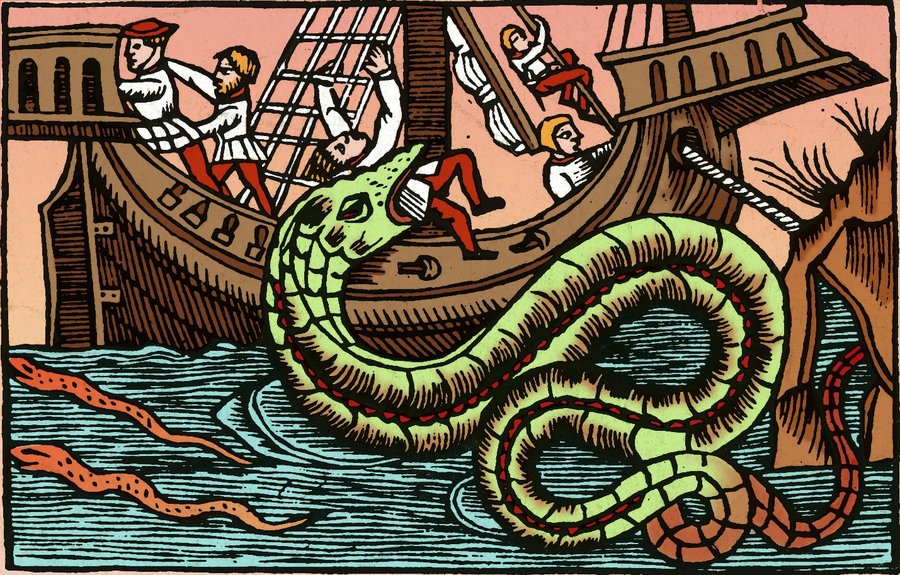
In the old mythology, the Kraken is not defeated. It is not slain or outsmarted or driven away. It is simply held. Contained by the weight of the water above it, by the depth and the dark and the pressure of a world that has not yet made space for what it is. The Kraken does not fail to surface because it is weak. It does not fail to surface because it has nothing to offer. It does not surface because the chains are real.
Your research is the Kraken. The years of rigorous inquiry, the genuine insight, the contribution that emerged from the intersection of your lived experience and your disciplined analysis — that is the Kraken. And it is chained. Not because you are lazy. Not because you lack ambition. Not because your work is insufficient. It is chained because the system that produced your doctorate was never designed to surface what you found.
The chains have names. Learn them. The first chain is time: you lead an organization, and publication is not your job description. The second chain is infrastructure: you have no co-author network, no journal submission experience, no department administrator to handle the mechanics of getting work into print. The third chain is incentive: unlike your tenure-track counterpart, you will receive no raise, no promotion, no institutional recognition for publishing your findings. The fourth chain is the gatekeeping apparatus itself: academic journals that look at practitioner research and find it insufficiently theoretical, insufficiently distanced from the experience that makes it meaningful, insufficiently aligned with conventions designed by and for people who have never stood where you stand. It is worth noting that many individual academics and journal editors are themselves frustrated by these same conventions; the enemy here is the architecture, not the people working inside it.
The Kraken is not weak. The Kraken has never been weak. The Kraken is contained — and there is a profound and important difference between those two things. Contained things do not stay contained forever. Pressure builds. The depth that once protected the system from the Kraken begins to feel, to the system, like the thinnest possible barrier between what is and what is coming.
What is coming is long overdue.
A Quarter Million Krakens Chained in the Abyss
Let us be precise about the scale of what we are describing, because the scale is the argument.
According to the NSF Survey of Earned Doctorates, U.S. institutions awarded 58,131 research doctoral degrees in 2024 alone, up from 57,806 in 2023. The "50,000" figure cited elsewhere understates reality. The true number is nearly 60,000 every year. Multiply that by twenty years, filter for practitioner-scholar fields, account for relevance decay, and you arrive at a number that should stop every leader, policymaker, and institution in their tracks: a quarter million. A significant portion of these, professional doctorates in education, business, healthcare administration, public policy, organizational leadership, and a dozen adjacent fields, are practitioner-led research studies. They are conducted by people who work in schools, hospitals, corporations, nonprofits, and government agencies. People who designed their studies around real problems in real organizations. People who produced findings with direct, immediate, actionable relevance to the fields they lead. Practitioner-scholar fields, including education leadership, health administration, business and organizational management, public administration, social work, and applied psychology, account for an estimated 65% of all research doctorates, roughly 37,000-38,000 dissertations per year. These are the fields producing knowledge with the most direct relevance to industry, government, healthcare, and the social sector. And they are the fields with the least infrastructure to surface what they find.
Do the math. At a conservative estimate of 500 hours of dissertation work per study, 58,000 dissertations represent nearly 30 million hours of human intellectual labor per year. That is nearly 30 million hours of research design, data collection, analysis, and writing. Thirty million hours of genuine inquiry into the hardest problems facing our organizations, our institutions, our communities. And the overwhelming majority of it lies shackled on university servers and departmental shelves. Not because it was bad. Because the infrastructure to liberate it was never built.
Consider what that means in aggregate. How many healthcare crises have persisted because the practitioner-scholar who found a structural solution never published it? How many school districts have repeated the same leadership failures because the research that diagnosed those failures sat on a university server, uncited and unread? How many organizations have paid consultants to rediscover what a practitioner-scholar documented in a dissertation that four people ever read?
This is not inefficiency. This is a collective intellectual tragedy. And it is happening at scale, every year, in full view of the institutions responsible for it.
And here is the reframe that changes everything: those nearly 60,000 dissertations do not represent 60,000 papers. They represent somewhere between 50,000 and 100,000 findings, frameworks, models, and ideas, insights that are already formed, already tested, already earned through years of rigorous inquiry in real organizations with real stakes. They do not need to be discovered. They need to be liberated.
Now consider not just this year's dissertations, but the last twenty years. Since 2004, U.S. institutions have awarded more than 1.1 million research doctoral degrees. Of those, an estimated 400,000 were completed in practitioner-scholar fields, including education leadership, organizational management, healthcare administration, public policy, and social services, by people who returned to their organizations and never published their findings. After accounting for relevance decay (research from 2005-2009 is partly dated; research from 2015-2024 remains highly actionable), a conservative estimate places approximately 270,000 practitioner dissertations still carrying actionable knowledge for industry, government, and the social sector today. At even one significant finding per dissertation, that is a quarter-million suppressed insights chained in the abyss. At two or three findings each, which rigorous dissertations routinely contain, the number of shackled ideas approaches 600,000 or more. These are not ancient texts. They are recent, rigorous, field-tested studies of the exact organizational problems that hospitals, school districts, municipalities, nonprofits, and corporations are paying consultants millions of dollars to solve right now, because no one ever built the infrastructure to surface what the practitioner-scholars already found. Globally, ProQuest's dissertation database contains more than 6 million records from 70 countries, of which 3.6 million are full-text searchable. The abyss is not a metaphor. It is a measurable, documented, quantifiable suppression of human knowledge at civilizational scale, and the chains holding these Krakens to its floor are built into incentive structures, credentialing hierarchies, and publishing architectures that evolved over decades without practitioners in mind.
This is why the value of surfacing practitioner knowledge is not additive. It is exponential. A single Kraken released into the knowledge ecosystem creates a citation, a voice, a timestamped contribution. But the transformative possibility lives not in the individual papers; it lives in the connections among them. What happens when released Krakens begin to encounter one another? That question points toward something much larger than a publishing platform. It points toward a three-stage progression that is the beating heart of what Undeterred Press is building: The Inner Kraken. The Great Unleashing. The Great Awakening. The first stage is personal: your research, your voice, your decision to surface. The second stage is collective: thousands of Krakens released, entering the record, finding one another. The third stage is the civilizational possibility that emerges when they do. But we are not there yet. We are still at the gates.
What Happens When the Chains Break
Undeterred Press was built because someone refused to accept that the system's failure to surface practitioner knowledge was inevitable. Kevin Schulte, a practitioner-scholar who has led, researched, and watched the gap firsthand, founded Undeterred Press not as a personal platform but as a structural answer to a structural problem. The name is not about any one person. Undeterred is the word for every practitioner-scholar who was told their work wasn't enough, wasn't publishable, wasn't the right kind of scholarly, and kept going anyway.
What Undeterred Press offers is specific, and it is the specific thing that has been missing. It is a pathway from dissertation to published work — built for people who are not embedded in publish-or-perish environments, who do not have department support staff and co-author networks and institutional submission infrastructure. It is a platform designed for applied research that takes practitioner knowledge seriously as scholarship — not as a lesser cousin of academic research, but as a distinct and rigorous form of inquiry that the world needs desperately and has access to almost never.
The gap in the publishing landscape is not subtle. Academic journals tell you your work is too applied. Mainstream publishers tell you it is too academic. Both gatekeeping systems deliver the same verdict in different language: you do not fit here. Undeterred Press exists to answer that verdict with a single, non-negotiable refusal. Your work fits. Your rigor is real. Your experience is evidence. And your findings deserve to be in the permanent, citable, searchable record of human knowledge, not on a university server that no one visits.
A quarter million practitioner dissertations. Still shackled. Still actionable. The consultants are charging to solve the exact problems the researchers already cracked.
- The Abyss, By the NumbersThe Great Awakening
One practitioner-scholar publishing their research is a Kraken surfacing. It is powerful. It is significant. It is long overdue. The world is richer for it, the field is more honest for it, the person who spent years producing that knowledge finally receives what they were always owed: a place in the permanent record, a citation, a voice that can be heard by the people who need what they found.
But consider what happens when it is not one. Consider what happens when released Krakens begin to encounter one another: when a dissertation on organizational citizenship behavior surfaces and connects with one on employee retention, which intersects with research on public-service motivation, which catches the eye of an entrepreneur studying why mission-driven teams outperform in crisis conditions. None of those researchers set out to collaborate. They didn't need to. The connection is latent in the work itself, waiting to be made the moment the work is visible. One insight suggests a hypothesis to the next. A framework from education illuminates a pattern in healthcare. A finding from public administration reframes a problem in corporate leadership. This is not addition. This is recombination, and recombination is where the most generative knowledge in human history has always come from.
Now add the accelerant. AI systems are increasingly capable of traversing bodies of literature, identifying structural similarities across disciplines, and surfacing connections that no single human researcher could hold simultaneously. But here is the crucial asymmetry: AI can only recombine what has been published, indexed, and made searchable. A dissertation on a university server is, to an AI knowledge system, functionally nonexistent. It cannot be found, cross-referenced, or built upon. The Great Unleashing, tens of thousands of practitioner-scholar findings entering the published record, is the precondition for what AI can do with them. The printing press did not create the ideas of the Renaissance. It lowered the cost of circulation until those ideas could find one another. Something analogous may be happening now, but with a crucial difference: this knowledge doesn't need to be discovered. It already exists. It has always existed. It needs only to be liberated.
We will not declare what that liberation produces. It would be too grandiose, too premature, and frankly too easy to claim the Second Enlightenment before the gates are even fully open. But ask yourself the question honestly: what becomes possible when 50,000 to 100,000 practitioner findings, from the hospitals, school districts, nonprofits, agencies, and corporations where the hardest real-world problems are actually being worked, enter the knowledge ecosystem simultaneously, become citable and searchable, and begin interacting with one another and with the most powerful synthesis tools humanity has ever built? We are not declaring an answer. We are insisting that you confront the question. Because the question alone should be enough to make the cost of silence intolerable.
The Great Awakening is not a trend. It is not a publishing initiative. It is a second-order knowledge event, and it is only possible because of each individual Kraken that chooses, first, to surface.
What the Leviathan Rewrites
When the Leviathan rises — and it is rising — it does not ask permission from the sea it leaves behind. It does not negotiate with the gatekeeping structures that failed to surface it. It does not wait for academic journals to revise their submission criteria or for universities to build release time into practitioner-scholar contracts. It creates the alternative. It builds the infrastructure. It publishes the work and enters the citation record and makes retroactive exclusion impossible.
Every time a practitioner-scholar publishes through Undeterred Press, something shifts. Not just for that individual — though the shift for that individual is real and significant and deeply earned. Something shifts in the field. In the discipline. In the definition of who counts as a credible voice. In the probability that the next practitioner-scholar who finds something important will have a path to the record before the seven-year scoop can claim what is rightfully theirs.
The Leviathan rewrites the rules of scholarly credit. It rewrites the question of whose experience qualifies as evidence. It rewrites the relationship between doing and knowing — insisting, with the full weight of a growing body of published practitioner research, that these are not opposites to be managed but partners to be celebrated. Every published practitioner-scholar is proof that the gatekeepers were wrong. Every citation is a timestamp that protects the next researcher from the scoop. Every voice that surfaces makes the Leviathan larger, more coherent, more impossible to dismiss.
Undeterred Press is not just a publishing house. It is the infrastructure of the Leviathan. It is the mechanism by which 50,000 annual Krakens begin, finally, to find the surface, and by which the collective force of practitioner knowledge begins to reshape the intellectual landscape it has always deserved to inhabit.
Your research was shackled. Not finished.